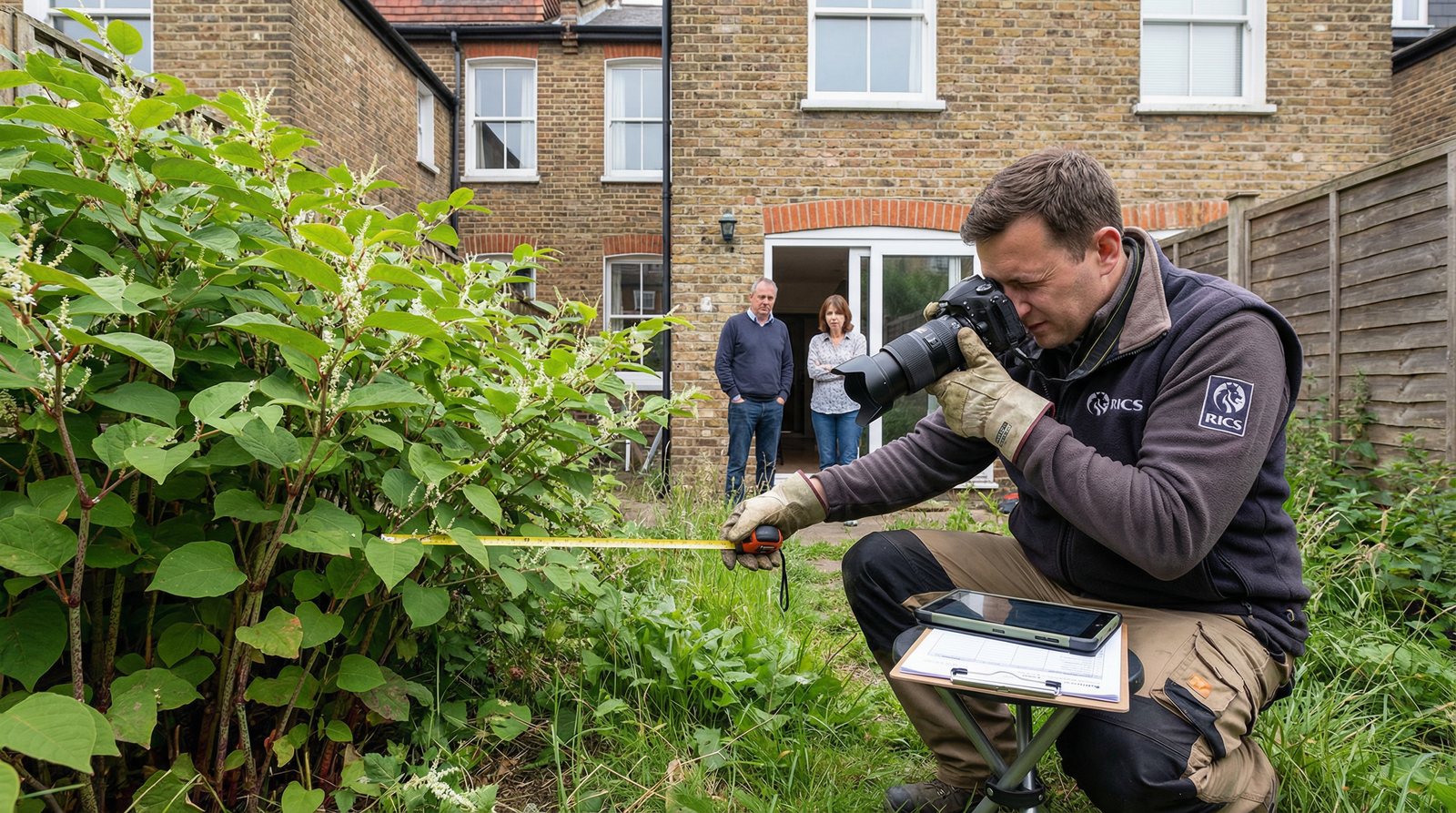
Japanese knotweed (Fallopia japonica) is an invasive plant that can damage properties, affect mortgageability, and create legal liabilities. As RICS chartered building surveyors, we identify Japanese knotweed during surveys and advise clients on appropriate action.
Identifying Japanese Knotweed
Summer Appearance (May-September)
- Stems: Hollow, bamboo-like, purple-red speckled, 2-3 meters tall
- Leaves: Shield-shaped, 10-20cm long, pointed tip
- Flowers: Clusters of creamy-white flowers (August-September)
- Growth: Rapid, dense stands, spreading vigorously
Winter Appearance (October-April)
- Dead brown/orange stems remaining upright
- Distinctive cane-like appearance
- Often forms dense thickets of dead stems
Why Japanese Knotweed Matters
Property Damage
- Can grow through tarmac, concrete, and building foundations
- Damages drains and underground services
- Weakens building structures
- Reduces natural light when growing near buildings
Mortgage Implications
Many lenders refuse mortgages if Japanese knotweed is:
- Within 7 meters of the property
- Present without management plan
- On neighboring land growing toward property
Result: Properties with Japanese knotweed can become unmortgageable, making them difficult or impossible to sell.
Legal Liabilities
- Criminal offense: Allowing Japanese knotweed to spread to wild
- Civil claims: Neighbors can sue for encroachment and damage
- Seller obligations: Must disclose presence on TA6 property information form
Treatment Options and Costs
Professional Herbicide Treatment
Cost: £1,500-£3,000 for typical garden
Duration: 3-5 years typically
Success rate: 90%+ with professional application
Includes: Site survey, treatment plan, insurance-backed guarantee (10 years)
Excavation and Removal
Cost: £5,000-£15,000+ depending on extent
Duration: Immediate removal possible
Considerations: Expensive, disruptive, requires specialist disposal
Combination Treatment
Cost: £3,000-£8,000
Approach: Excavation of most accessible areas plus herbicide treatment of remaining
Buying Property with Japanese Knotweed
Essential Checks
- Obtain professional survey confirming extent and location
- Request management plan and guarantee from specialist contractor
- Confirm your mortgage lender will accept the property
- Check insurance available
- Verify treatment costs and guarantees
Price Negotiations
Properties with Japanese knotweed typically sell for 5-15% less than similar properties. Negotiate to cover:
- Treatment costs (£1,500-£15,000)
- Monitoring costs over treatment period
- Potential insurance premium increases
- Future resale difficulties
Legal Obligations for Sellers
Sellers must:
- Disclose Japanese knotweed presence on TA6 form
- Provide details of any treatment carried out
- Supply management plans and guarantees if available
- Be truthful about knowledge of presence
Failure to disclose can result in legal action and substantial damages.
Frequently Asked Questions
Can I get a mortgage on property with Japanese knotweed?
Possibly, but it's challenging. Many lenders refuse if knotweed is within 7 meters of the building. However, some lenders will proceed if there's an insurance-backed management plan from specialist contractor. Obtain treatment plan before applying for mortgage.
Should I walk away from property with Japanese knotweed?
Not necessarily. With appropriate treatment plan, guarantee, and price negotiation, properties with Japanese knotweed can be viable purchases. However, ensure you can obtain mortgage, insurance, and are comfortable with ongoing monitoring. If extent is severe or seller won't negotiate fairly, walking away may be prudent.
Conclusion
Japanese knotweed is serious but manageable. Professional treatment with insurance-backed guarantees makes affected properties mortgageable and resellable. Always commission RICS building survey to identify Japanese knotweed before purchasing.
About the Author: This Japanese knotweed guide was developed by London Home Surveys' botanical risk assessors, RICS chartered surveyors with specialist training in invasive plant identification who have identified over 150 Japanese knotweed infestations during surveys, coordinating with specialist treatment companies to secure insurance-backed guarantees for affected properties.