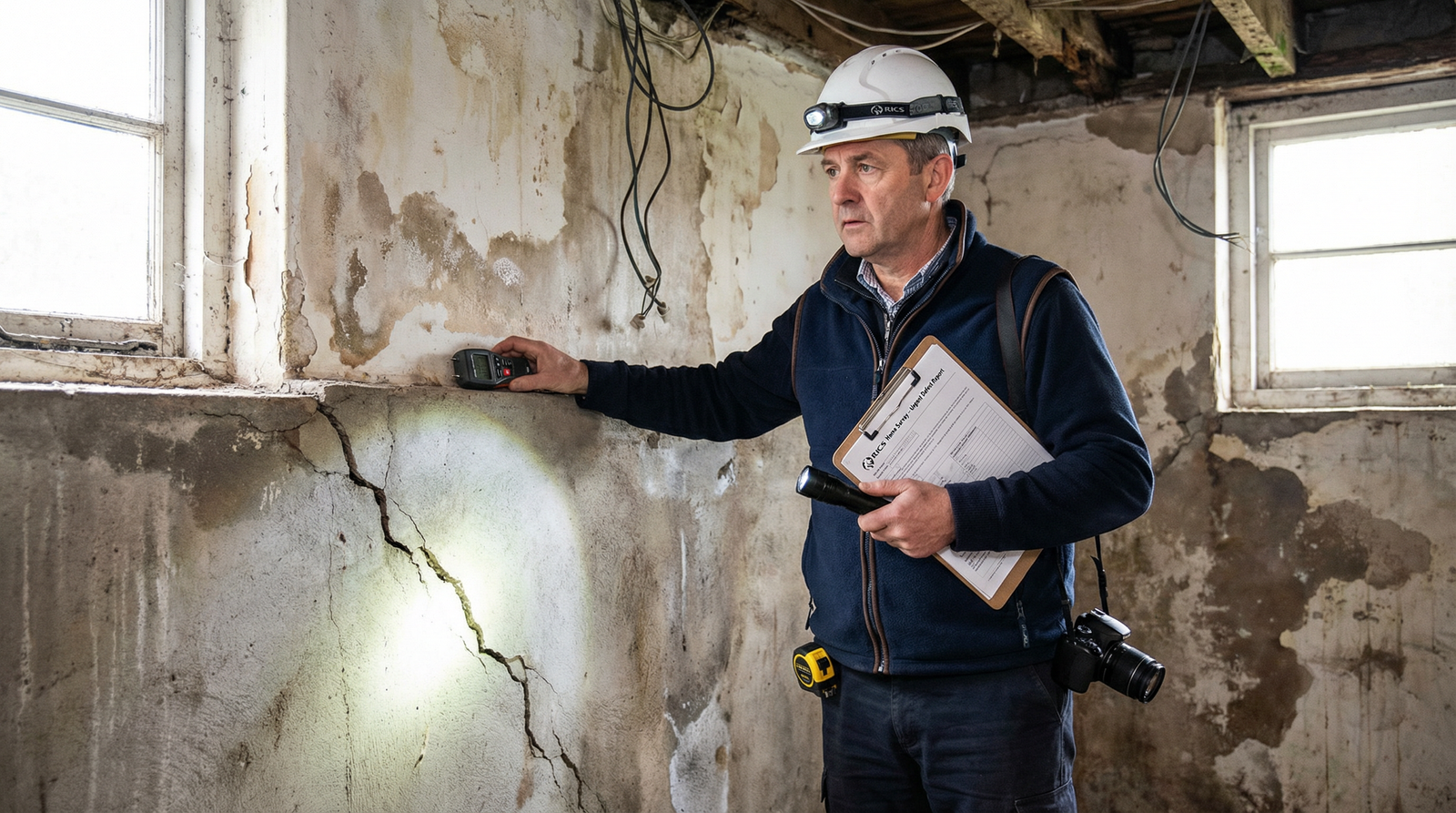
Not all property defects are created equal. As RICS chartered building surveyors conducting hundreds of surveys across London each year, we've identified certain warning signs that should give any buyer serious pause. While most issues can be resolved with money and time, some red flags indicate problems so severe or costly that walking away might be the wisest decision.
This guide explains the critical red flags we look for during homebuyer surveys and building surveys, helping you understand which problems are deal-breakers and which are simply negotiating points.
Critical Red Flag #1: Active Structural Movement
While many older London properties show evidence of historic settlement, active ongoing structural movement is a serious concern that can affect both safety and mortgageability.
Warning Signs
- Progressive cracking that has worsened in recent months
- Cracks cutting through recent decoration or repairs
- Doors and windows that increasingly stick or won't close properly
- Floor levels that have noticeably changed
- External walls visibly leaning or out of plumb by more than 20mm per meter
- Fresh cracking to recently repaired areas
Why It's Serious
Active structural movement indicates an ongoing problem that will continue to worsen without intervention. Causes include progressive subsidence, inadequate structural support, or deteriorating building elements. Repairs can be extremely expensive (£30,000-£100,000+), may not be covered by insurance if pre-existing, and the property may be unmortgageable until resolved.
Critical Red Flag #2: Extensive Dry Rot
While wet rot is common and relatively straightforward to treat, extensive dry rot (Serpula lacrymans) is one of the most serious defects we encounter during building surveys.
Identifying Extensive Dry Rot
- Widespread fungal growth affecting multiple areas
- White, cotton-wool like mycelium visible
- Rust-red spore dust on surfaces
- Fruiting bodies (mushroom-like structures)
- Affected areas extending through masonry
- Structural timbers significantly compromised
Cost and Complexity
Extensive dry rot treatment requires specialist contractors and can cost £20,000-£50,000+ for a typical London house. Treatment involves removing all affected timber (including a 500mm margin), treating adjacent masonry, eliminating the moisture source, and installing physical barriers. The work is highly disruptive, often requiring removal of floor and wall finishes across large areas.
Critical Red Flag #3: Major Roof Structure Defects
The roof structure is fundamental to building integrity. Serious roof defects can affect the entire property and represent some of the most expensive repairs.
Serious Roof Issues
- Severe sagging or deflection (more than 50mm over 3-meter span)
- Rotten or severely decayed roof timbers
- Failed roof trusses or purlins
- Inadequate support for heavy roof coverings
- Roof spread causing walls to lean outward
- Evidence of past collapses or emergency propping
Implications
Major roof structure repairs cost £20,000-£60,000+ and often require temporary accommodation during works. Some insurance policies don't cover gradual deterioration, leaving you liable for full costs. Additionally, scaffolding for roof works in London can add £5,000-£10,000 to project costs.
Critical Red Flag #4: Japanese Knotweed
Japanese knotweed is an invasive plant that can cause serious structural damage and affect both mortgageability and saleability.
Identification
- Purple-red stems resembling bamboo
- Shield-shaped leaves 10-20cm long
- Clusters of creamy-white flowers in late summer
- Can grow through tarmac, concrete, and building structures
- Often found near watercourses, railways, and former industrial sites
Why It Matters
Japanese knotweed treatment costs £3,000-£10,000+ and takes several years to fully eradicate. Many mortgage lenders refuse to lend on properties with Japanese knotweed within 7 meters of the building. Sellers must disclose its presence, and failure to do so can result in legal action. Even after treatment, some buyers may be deterred, affecting resale value.
Critical Red Flag #5: Dangerous Electrics
While building surveys don't include full electrical testing, obvious dangerous electrical installations are a serious red flag.
Warning Signs
- Ancient fuse boxes with rewirable fuses or no RCD protection
- Rubber or fabric-insulated wiring (pre-1960s)
- Evidence of scorching or burning around outlets
- Amateur or dangerous DIY electrical work
- Insufficient earthing or bonding
- Exposed live conductors or unsafe connections
Costs and Safety
Complete rewiring of a typical London 3-bed house costs £4,000-£8,000 and is highly disruptive, requiring lifting floorboards and chasing walls. Dangerous electrics pose immediate fire and electrocution risks and may invalidate home insurance. Properties without adequate electrical safety may fail mortgage valuation surveys.
Serious Concerns (Not Deal-Breakers, But Expensive)
Some issues, while serious and expensive, don't necessarily mean you should walk away – but they require careful consideration and budget allocation:
Significant Damp Problems
Widespread penetrating damp, especially from multiple sources (roof leaks, failing render, blocked gutters, defective DPC). Treatment costs can reach £10,000-£30,000 for comprehensive repairs across a whole property.
Asbestos Throughout
Properties with extensive asbestos-containing materials (especially asbestos insulation board and sprayed coatings). Safe removal requires specialist licensed contractors at £50-£100+ per square meter. Full house asbestos removal can exceed £15,000-£30,000.
Failed Drainage Systems
Collapsed or severely damaged underground drainage requiring excavation and replacement. Costs vary enormously depending on depth and access but can reach £8,000-£20,000 for full system replacement in typical London properties.
Lack of Building Regulation Compliance
Major extensions or conversions completed without building regulations approval or significantly not complying with regulations. Obtaining retrospective approval may be impossible, affecting mortgageability and potentially requiring expensive remedial works or even demolition.
Red Flags for Leasehold Properties
Leasehold flats present unique red flags beyond physical building condition:
Lease Length Below 70 Years
Mortgages become difficult or impossible, and lease extension costs escalate dramatically due to marriage value. Extension costs can reach £30,000-£60,000+ depending on property value and location.
Cladding and Fire Safety Issues
Buildings over 18 meters without an EWS1 certificate or with dangerous cladding identified. Properties may be unmortgageable, potentially leaving you unable to sell. Remediation costs (even if not payable by leaseholders) cause significant service charge increases and uncertainty.
Escalating Ground Rent
Leases with doubling ground rent clauses or ground rent exceeding £250 per year. Properties with problematic ground rents may be unmortgageable with many lenders and difficult to sell.
Large Outstanding Section 20 Bills
Major works bills exceeding £15,000-£20,000 per flat, especially if works haven't been properly consulted on or if there's dispute about necessity/costs. You may inherit liability for these bills on completion.
When to Walk Away
Based on thousands of surveys across London, we recommend seriously considering walking away when:
- Multiple serious defects are present (e.g., structural movement + extensive dry rot + roof failure)
- Estimated repair costs exceed 20% of the property value
- Issues affect mortgageability and you require financing
- The seller refuses to negotiate on price despite serious defects
- Active problems with no identifiable cause (such as progressive subsidence without obvious explanation)
- Leasehold issues making the property unmortgageable or unsellable
- Legal issues like Japanese knotweed affecting neighbours' properties
Using Survey Findings to Negotiate
For properties where issues are serious but not deal-breakers, use your RICS survey report to negotiate:
Negotiation Strategies
- Obtain detailed quotes from reputable contractors for all identified defects
- Add contingency of 15-20% to quoted costs for unexpected issues
- Request price reduction equal to repair costs or alternatively request works are completed before completion
- Consider retention where your solicitor holds back funds from the purchase price until specific works are satisfactorily completed
- Be prepared to walk away if the seller won't negotiate reasonably
Frequently Asked Questions
Should I walk away if the survey identifies structural issues?
Not necessarily. Most structural issues can be resolved with appropriate repairs and price negotiation. Walk away only if: repairs cost more than 20% of property value; the seller won't negotiate fairly; issues affect mortgageability when you need financing; or multiple serious problems exist. Many buyers successfully purchase properties with structural issues after negotiating substantial price reductions to cover repair costs.
Can I renegotiate after receiving my survey report?
Absolutely. Survey findings that reveal defects not apparent during viewings provide legitimate grounds for renegotiation. Present your surveyor's report along with contractor quotes for necessary works, and request a price reduction or ask the seller to complete repairs before completion. Be reasonable but firm – if the seller refuses to negotiate on genuinely serious issues, be prepared to walk away. There are always other properties, but you only get one chance to avoid expensive mistakes.
What survey level identifies the most red flags?
A Level 3 building survey provides the most detailed investigation and will identify more issues than a Level 2 homebuyer survey. However, this doesn't mean Level 3 surveys "find problems that aren't there" – they simply provide more thorough investigation. For older properties, unusual construction, properties in poor condition, or those you're planning to renovate, a Level 3 survey is essential. The detailed findings help you make fully informed decisions and provide strong evidence for negotiations.
Are estate agents required to disclose major defects?
Estate agents must not make misleading statements or deliberately conceal defects they're aware of. However, they may genuinely not know about hidden issues like subsidence, dry rot, or electrical problems. This is why commissioning your own RICS survey is essential – you cannot rely on the estate agent or seller's disclosures. If major defects are discovered that were deliberately concealed, you may have grounds for legal action, but prevention through proper surveying is far preferable to pursuing claims after purchase.
How long do I have to renegotiate or pull out after the survey?
Until exchange of contracts, you can renegotiate or withdraw without penalty (though you'll lose survey and legal costs already incurred). Once contracts are exchanged, you're legally bound to complete the purchase. This is why timing your survey appropriately is crucial – allow enough time after receiving the report to obtain quotes, negotiate with the seller, and make informed decisions before exchange. Never feel pressured to exchange contracts before you're completely comfortable with the property's condition and have resolved negotiation issues.
Conclusion: Knowledge Is Your Best Protection
Understanding survey red flags empowers you to make informed property purchase decisions. While some defects are genuinely serious enough to warrant walking away, many can be successfully managed through appropriate price negotiation and planned remedial works.
The key is commissioning a thorough RICS survey from experienced chartered building surveyors before making final commitments. The few hundred pounds spent on a comprehensive survey can save you tens of thousands in unexpected repair costs and, perhaps more importantly, years of stress and regret.
As RICS chartered surveyors with extensive experience across all London boroughs and property types, we provide the detailed, honest assessment you need to proceed with confidence or walk away with your finances intact.
About the Author: This red flags guide was compiled by London Home Surveys' most experienced surveyors, RICS chartered professionals who have collectively identified over 10,000 critical property defects during surveys, helping hundreds of buyers avoid catastrophic purchases and negotiate fair prices on salvageable properties.