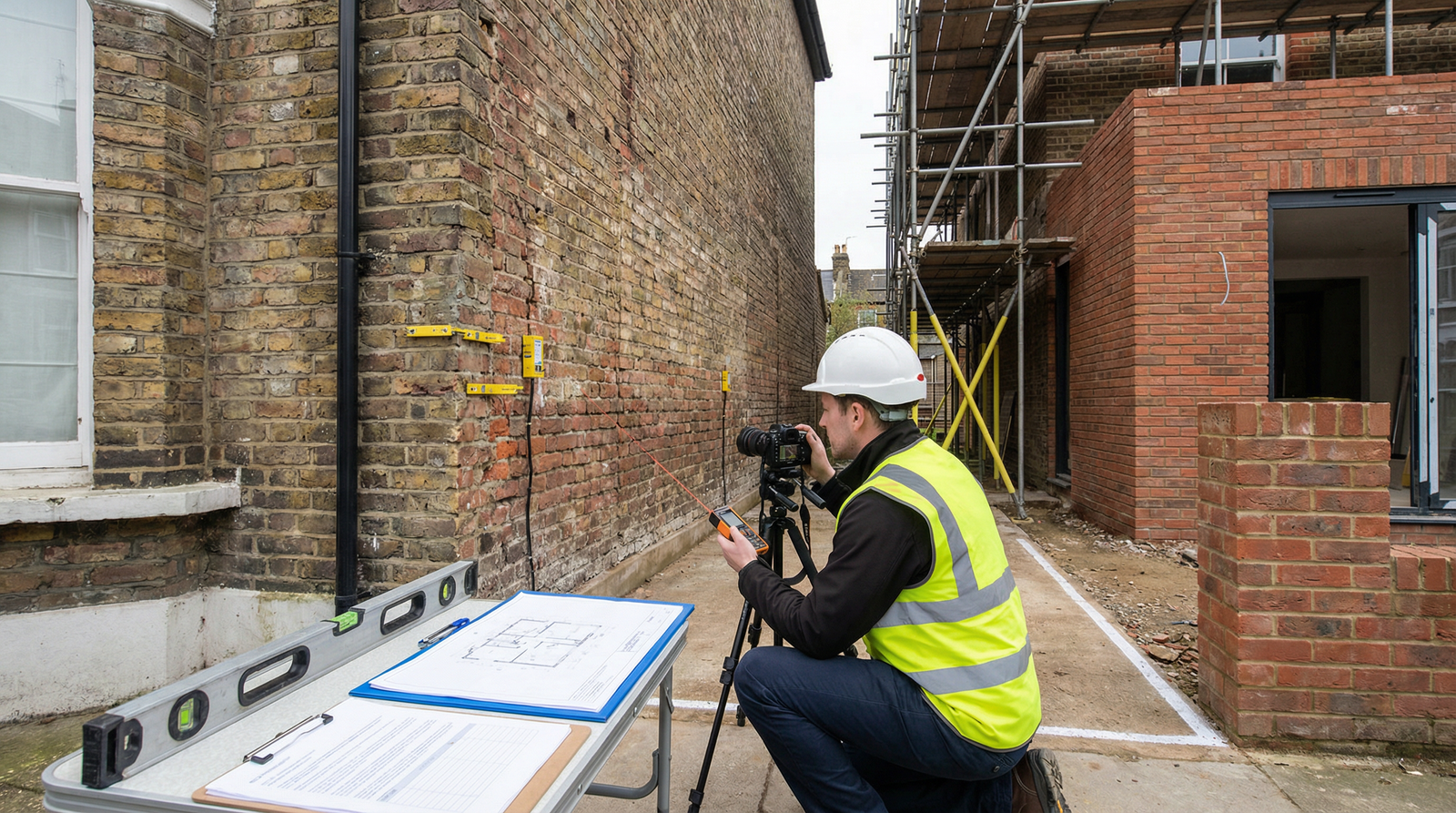
The Party Wall Act 1996 protects building owners and neighbors when construction work affects shared walls or boundaries. As RICS party wall surveyors, we help London homeowners navigate this process for extensions, loft conversions, and building work.
What Is a Party Wall?
Party walls include:
- Shared walls between semi-detached or terraced properties
- Shared walls between flats
- Walls on boundaries (even if on your land)
- Walls straddling property boundaries
When Do You Need Party Wall Agreement?
Common scenarios requiring party wall notices:
- Building on boundary: New walls on/astride boundary line
- Cutting into party wall: Inserting beams or damp proof courses
- Removing chimney breasts: From party walls
- Underpinning: Near or under neighbor's property
- Excavations: Within 3-6 meters of neighbor's foundations
- Loft conversions: Affecting shared walls or structures
The Party Wall Process
Step 1: Serve Notice (2 months before work)
Building owner serves formal notice to adjoining owners describing proposed works.
Step 2: Neighbor Response (14 days)
- Consent: Work proceeds without party wall award
- Dissent or no response: Party wall award required
Step 3: Appoint Surveyors
- Single agreed surveyor (cheapest), OR
- Each party appoints separate surveyor
- Surveyors prepare party wall award
Step 4: Party Wall Award
Document setting out:
- Description of works
- Schedule of condition (photos/description of neighbor's property)
- How and when work will proceed
- Rights of access for inspections
Party Wall Costs
Building Owner Pays:
- Own surveyor fees: £700-£1,200
- Neighbor's surveyor fees: £700-£1,200
- Total: £1,400-£2,400 typically for straightforward cases
Complex cases or difficult neighbors can increase costs to £3,000-£5,000+.
Who Pays for Repairs?
Building owner responsible for:
- Making good damage caused by works
- Repairing cracks or damage to neighbor's property
- Restoring finishes to previous condition
Common Mistakes to Avoid
- Starting work without notice: Neighbor can seek injunction stopping work
- Inadequate notice period: Must be 2 months (building works) or 1 month (excavations)
- Not documenting neighbor's property: Schedule of condition protects against false damage claims
- Ignoring the Act: Can result in legal action and expensive delays
Benefits of Party Wall Agreement
- Protects both parties' interests
- Prevents disputes and legal action
- Documents pre-existing condition
- Provides framework for resolving issues
- Gives legal right of access for inspections
Frequently Asked Questions
Do I need party wall agreement for loft conversion?
Usually yes, if works affect party walls (inserting steels, cutting rafters, underpinning). Even if your builder says it's unnecessary, the Party Wall Act is law and ignoring it risks legal action from neighbors. Serve proper notice 2 months before starting work.
Can my neighbor stop my building work?
No, neighbors cannot unreasonably prevent work. The Party Wall Act gives building owners rights to carry out necessary works. However, neighbors can insist on proper process, surveyors, and protection of their property. Disputes are resolved through party wall surveyors and ultimately appeals to county court.
Conclusion
Party wall agreements protect both building owners and neighbors. While adding cost and time, they prevent disputes and provide legal framework for building work. Always serve proper notice and appoint experienced RICS party wall surveyors.
About the Author: This party wall guide was written by London Home Surveys' party wall specialists, RICS chartered surveyors who act on over 100 party wall matters annually across London, representing both building owners and adjoining owners to ensure fair awards, minimize disputes, and protect all parties' interests under the Party Wall Act 1996.