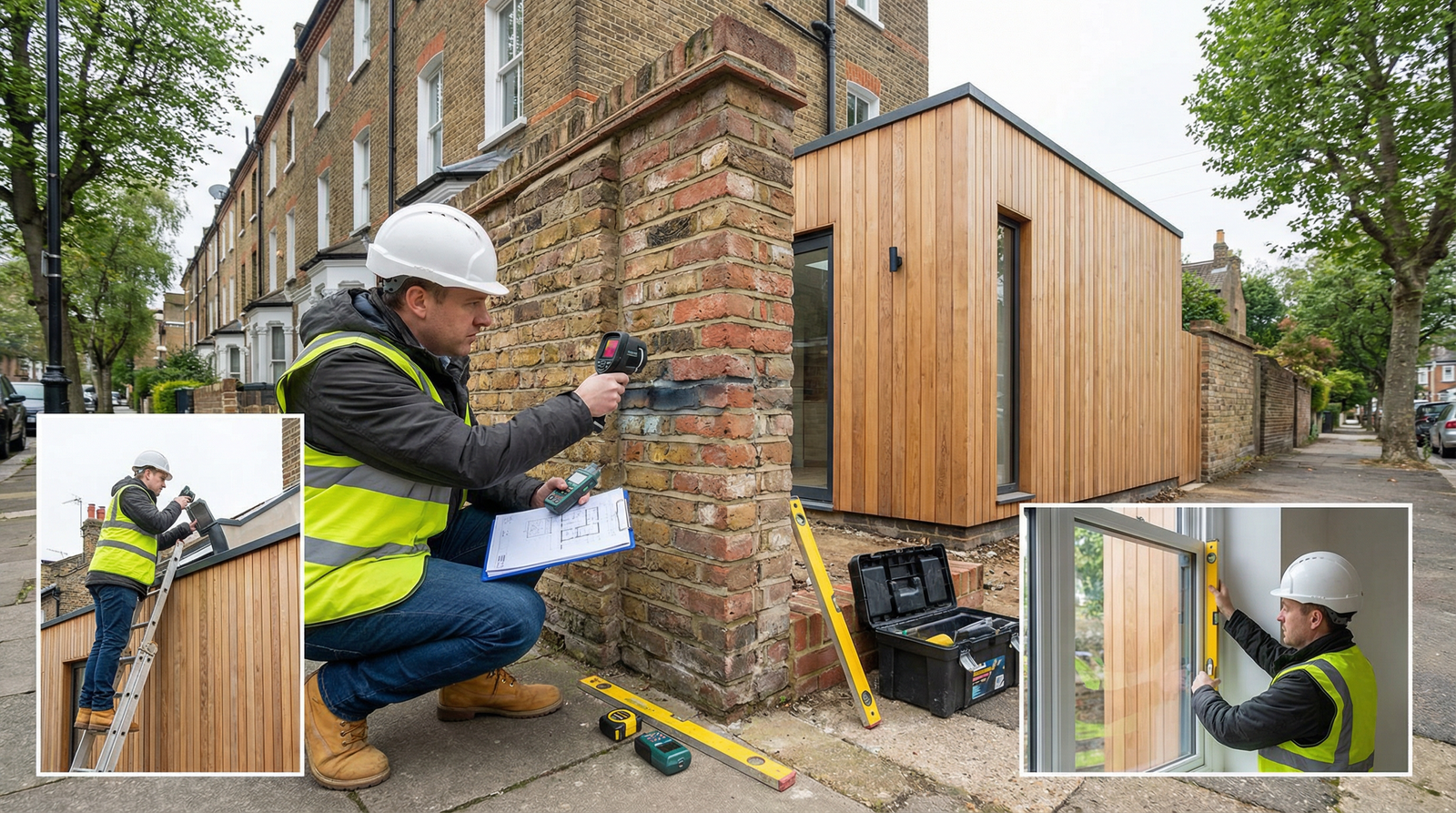
Extensions are extremely common in London properties where space is at a premium. As RICS chartered building surveyors, we scrutinize extensions carefully during surveys as they frequently harbor defects and compliance issues that affect both value and insurance.
Common Extension Problems
Lack of Building Regulations Approval
The single most common issue: extensions built without building regulations approval or significantly not complying with regulations. This affects mortgageability, insurance, and potentially requires expensive remediation or even demolition.
What to do: Request building regulations completion certificates before purchasing. If unavailable, consider regularization certificate (retrospective approval) which costs £500-£1,500 but may be impossible if work doesn't comply.
Poor Construction Quality
- Inadequate foundations causing cracking or movement
- Insufficient damp proof courses
- Poor weatherproofing and water penetration
- Inadequate structural support for openings
- Substandard roofing causing leaks
Damp and Waterproofing Issues
Extensions frequently suffer damp problems from:
- Ground levels above DPC
- Poor cavity tray installation at roof junctions
- Inadequate flashing around roof lights
- Failed flat roof coverings
- Blocked airbricks to suspended floors
What RICS Surveyors Check
Structural Adequacy
- Foundation adequacy (visible from external inspection)
- Wall thickness and construction type
- Lintels over openings
- Connection to main building
- Roof structure and support
- Signs of movement or cracking
Building Regulations Compliance
- Structural adequacy
- Damp proofing provisions
- Thermal insulation (walls, roof, floors)
- Ventilation (particularly bathrooms and kitchens)
- Fire safety (escape windows, fire doors if required)
- Drainage and rainwater goods
Quality of Workmanship
- Finish quality and alignment
- Matching materials with existing building
- Window and door fitting
- Internal finishes
- Services (electrical, plumbing, heating)
Building Regulations: Why They Matter
Extensions require building regulations approval to ensure they meet safety and performance standards. Work completed without approval or not meeting regulations can:
- Affect mortgages: Lenders may refuse to lend or require indemnity insurance
- Impact insurance: Insurers may refuse claims related to non-compliant work
- Reduce value: Properties with non-compliant extensions sell for less
- Cause legal issues: Local authority can enforce removal of non-compliant work
- Create safety risks: Non-compliant work may be structurally inadequate or unsafe
Indemnity Insurance
For extensions without building regulations approval, indemnity insurance may be an option:
- Cost: One-off premium of £100-£300 typically
- What it covers: Legal costs if local authority enforces action
- What it doesn't cover: Actual defects, repair costs, or injuries from poor work
- Limitations: Becomes void if local authority aware of breach
Important: Indemnity insurance is NOT a substitute for proper compliance – it's risk mitigation only.
Questions to Ask Sellers
- When was the extension built?
- Do you have building regulations approval and completion certificate?
- Do you have planning permission (if required)?
- Who carried out the work (name of builder)?
- Do you have any warranties or guarantees?
- Were architects or structural engineers involved?
- Have there been any problems with the extension?
Cost Implications
If purchasing property with extension issues, consider these costs:
- Regularization certificate: £500-£1,500 (if achievable)
- Indemnity insurance: £100-£300
- Remedial works: £5,000-£30,000+ depending on issues
- Complete rebuild: £1,500-£2,500 per sqm
Use survey findings to negotiate purchase price reductions covering these costs.
Conclusion
Extensions require careful scrutiny during property surveys. Commission RICS Level 3 building survey for properties with significant extensions to identify compliance issues and defects before committing to purchase.
About the Author: This extension guide was compiled by London Home Surveys' building regulations specialists, RICS chartered surveyors who have assessed over 2,000 property extensions across London, identifying non-compliant work in 35% of cases and helping buyers negotiate appropriate price reductions or secure retrospective building control approval.