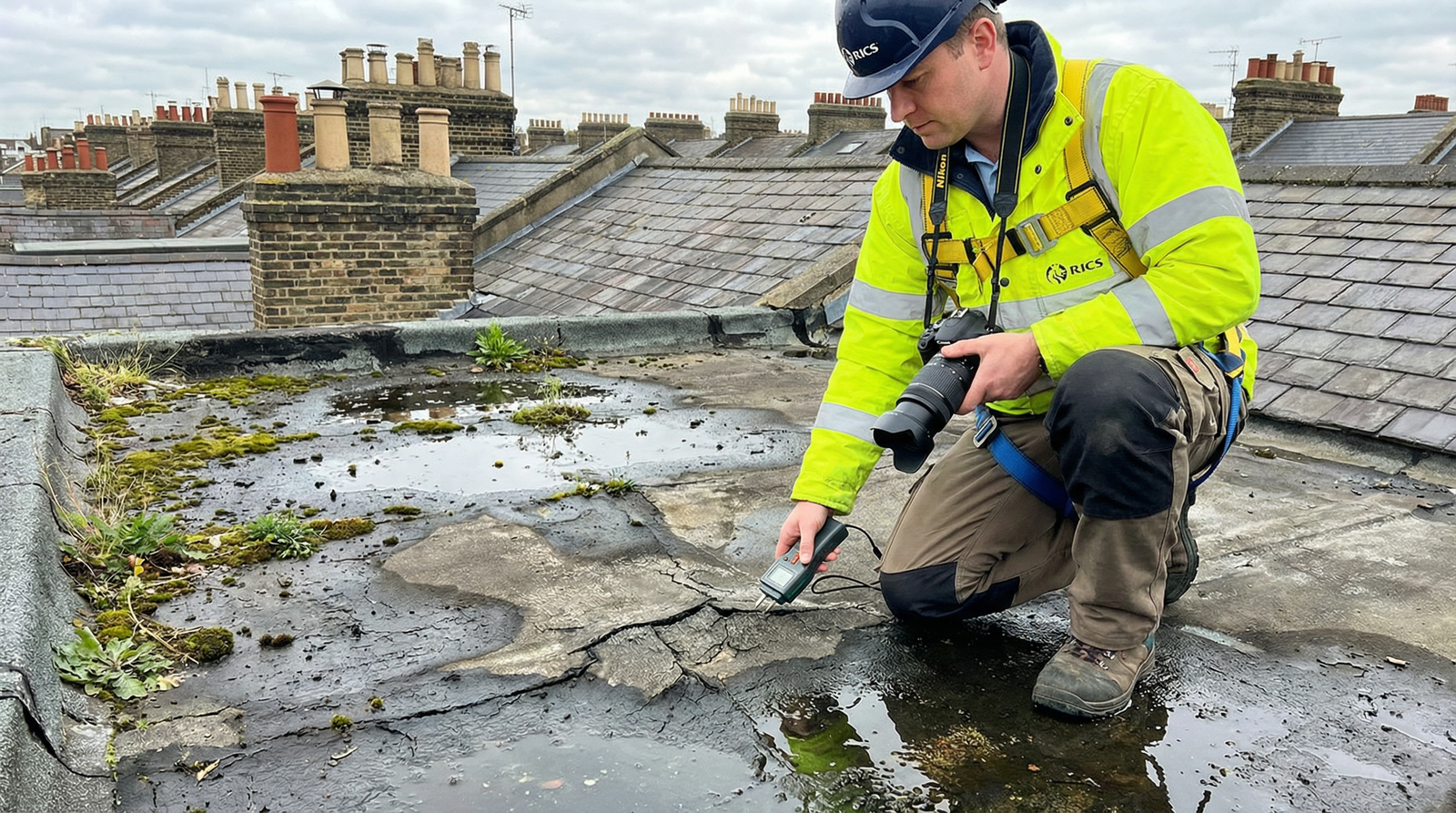
Flat roofs are common on London properties – found on extensions, garages, dormer conversions, and many modern buildings. As RICS chartered building surveyors, we inspect hundreds of flat roofs annually and regularly identify problems ranging from minor leaks to complete failure requiring replacement. Understanding flat roof issues, their causes, and appropriate solutions helps buyers make informed decisions and homeowners maintain their properties effectively.
Common Flat Roof Problems
Water Pooling (Ponding)
Flat roofs should have slight falls (slopes) to drain water. When these are inadequate or the roof structure sags, water pools on the surface. Standing water accelerates deterioration of all roof coverings and commonly leads to leaks.
Solutions: Create proper falls through structural repairs (£2,000-£8,000) or replace roof with correct falls built in.
Blistering and Bubbling
Felt and bitumen roofs develop blisters when moisture becomes trapped beneath the surface. These blisters eventually burst, creating vulnerable areas where leaks develop.
Solutions: Minor blistering can be patched (£200-£500). Extensive blistering indicates the roof is nearing end of life and requires replacement.
Cracking and Splitting
UV exposure, thermal movement, and age cause flat roof coverings to crack and split. These cracks allow water penetration and progressively worsen.
Solutions: Isolated cracks can be repaired with patches or sealants (£300-£800). Multiple or large cracks indicate replacement needed.
Felt Delamination
Built-up felt roofs have multiple layers bonded together. As roofs age, these layers separate (delaminate), compromising waterproofing.
Solutions: Delamination cannot be effectively repaired – full roof replacement required (£3,000-£12,000 depending on size and access).
Flat Roof Materials and Lifespan
Traditional Felt (15-20 years)
- Cost: £40-£70 per sqm
- Lifespan: 15-20 years typically
- Common issues: Splitting, blistering, felt failure
- Best for: Budget-conscious projects, sheds, garages
Modern GRP Fibreglass (25-30 years)
- Cost: £80-£120 per sqm
- Lifespan: 25-30+ years
- Benefits: Seamless, durable, low maintenance
- Best for: Extensions, balconies, accessible areas
EPDM Rubber (30-50 years)
- Cost: £70-£100 per sqm
- Lifespan: 30-50 years
- Benefits: Flexible, durable, quick installation
- Best for: Most flat roof applications
Single Ply Membrane (30-40 years)
- Cost: £90-£140 per sqm
- Lifespan: 30-40 years
- Benefits: Professional finish, warranties available
- Best for: Larger roofs, commercial applications
Repair vs. Replacement Decision
When Repairs Are Appropriate
- Roof under 10 years old with isolated defect
- Single small leak with identifiable cause
- Localized damage from specific event (e.g., fallen branch)
- Temporary solution while planning replacement
Typical repair costs: £200-£1,000 for patches, flashing repairs, or minor works.
When Replacement Is Necessary
- Roof over 15-20 years old (felt) or showing age-related deterioration
- Multiple leaks or widespread cracking/blistering
- Structural issues causing ponding
- Previous repairs failing or needing frequent patching
- Visible felt delamination or substrate decay
Typical replacement costs for average extension (20-30 sqm):
- Felt: £1,200-£2,100
- GRP Fibreglass: £2,400-£3,600
- EPDM: £2,100-£3,000
- Single Ply: £2,700-£4,200
Add £500-£2,000 for scaffolding if required and £500-£1,500 for insulation upgrades to meet building regulations.
What RICS Surveyors Check
During building surveys, we assess flat roofs from both above (where accessible) and below:
External Inspection
- Overall condition of covering (cracks, blisters, wear)
- Evidence of ponding or inadequate drainage
- Upstand and flashing condition
- Parapet wall condition and copings
- Outlets and rainwater goods
- Age and expected remaining lifespan
Internal Inspection
- Ceiling staining indicating leaks
- Evidence of water ingress or damp
- Structural adequacy of roof support
- Insulation presence and adequacy
- Ventilation provision
Building Regulations for Flat Roofs
When replacing or creating flat roofs, building regulations require:
- Insulation: U-value of 0.18 W/m²K (substantial insulation needed)
- Falls: Minimum 1:80 gradient for drainage
- Fire resistance: Particularly important for party walls
- Structural adequacy: To support loads including snow and maintenance access
Non-compliant roofs can affect insurance, mortgages, and resale. Always ensure building regulations approval for flat roof works.
Maintenance Tips
Extend flat roof life through regular maintenance:
- Annual inspections: Check for damage, ponding, blocked outlets
- Keep clean: Remove debris, moss, and vegetation
- Clear outlets: Ensure rainwater drains freely
- Address issues promptly: Small problems become big expensive ones
- Avoid walking on roof: Minimizes damage to covering
- Professional inspections: Every 5 years or after severe weather
Frequently Asked Questions
How long do flat roofs last?
Lifespan depends on material: traditional felt 15-20 years, GRP fibreglass 25-30 years, EPDM rubber 30-50 years, single ply membrane 30-40 years. Regular maintenance extends lifespan, while poor installation, inadequate drainage, or neglect shortens it. Budget for replacement at upper end of lifespan range to avoid being caught out by failure.
Can flat roofs be repaired or do they always need replacing?
Repairs are viable for young roofs with isolated damage or leaks. However, flat roofs over 15 years old or showing multiple issues typically require replacement. Repeated repairs to old roofs are false economy – you'll spend £500-£1,000 on patches that fail within months. If your roof needs its third repair or is approaching 15-20 years old, budget for replacement instead.
What's the best flat roof material?
For most London extensions and domestic applications, GRP fibreglass and EPDM rubber offer best value. GRP provides seamless, hard-wearing finish ideal for foot traffic. EPDM is cost-effective with excellent longevity. Avoid cheap felt for anything permanent – while initially cheaper, frequent replacement makes it expensive long-term. Invest in quality materials with proper installation for best results.
Conclusion
Flat roof problems are common in London properties but manageable with proper assessment and timely intervention. Whether buying a property with flat roof issues or maintaining your existing home, professional RICS surveying provides the information needed for informed decisions.
Contact our team of RICS chartered surveyors for professional flat roof assessment during your building survey.
About the Author: This flat roof guide was written by London Home Surveys' roofing specialists, RICS chartered surveyors who inspect over 800 flat roofs annually across London, working with specialist roofing contractors to provide accurate lifespan estimates and replacement cost projections that help buyers make informed purchasing decisions.