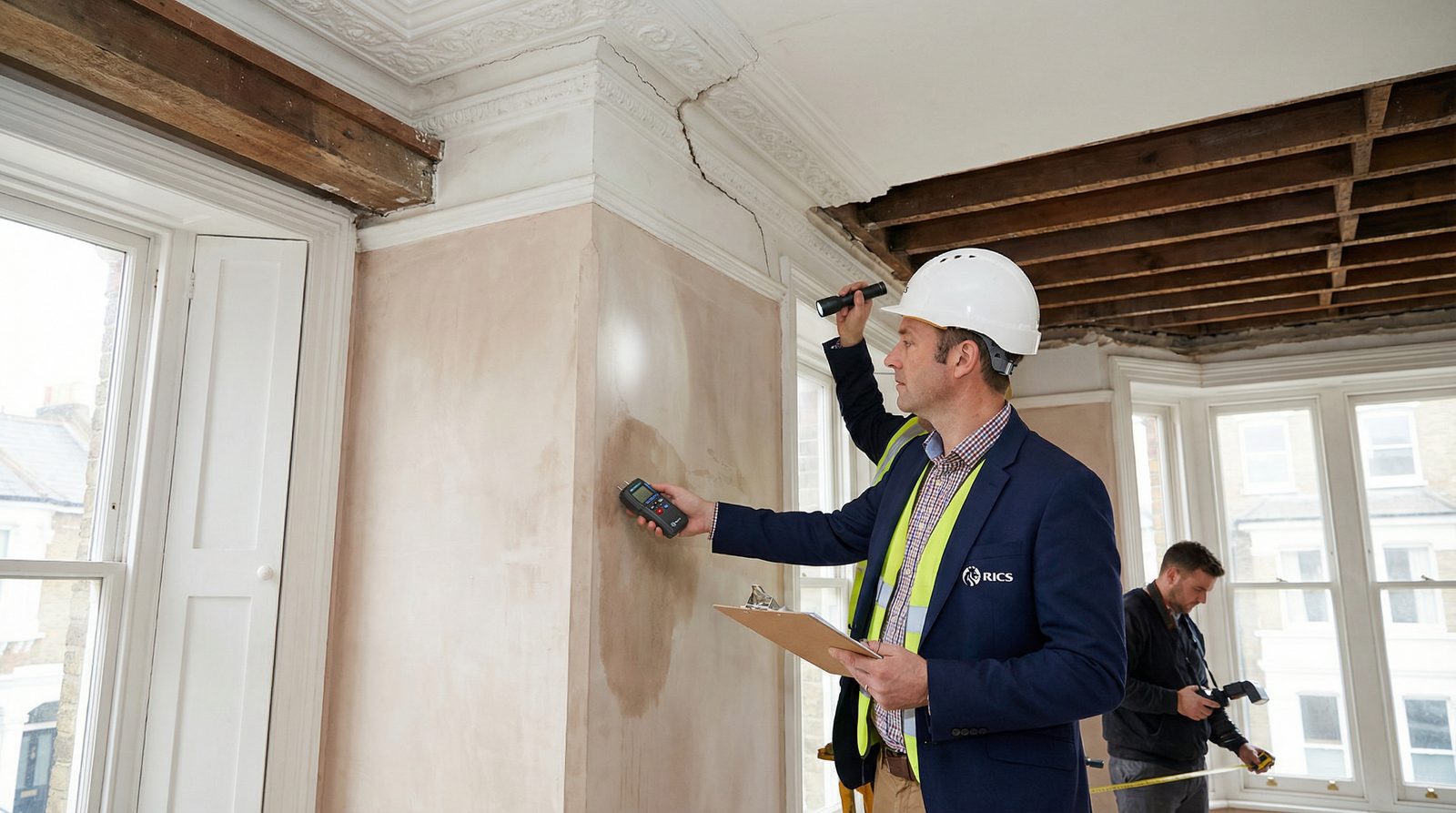
London's period properties are some of the most desirable homes in the world, but they also come with unique structural challenges. As RICS chartered building surveyors specializing in older London properties, we conduct hundreds of surveys each year on Victorian, Edwardian, and Georgian houses. Understanding common structural issues in these buildings is essential for anyone considering purchasing a period home.
The good news is that most structural issues in older properties are not as serious as they first appear. Buildings that have stood for 100-200 years have already proven their durability. However, distinguishing between normal age-related changes and serious structural defects requires expert knowledge and experience.
Understanding Period Property Construction
Before identifying structural issues, it's important to understand how older London properties were constructed. This knowledge helps put observed defects into proper context.
Victorian Houses (1837-1901)
Victorian properties represent the largest proportion of London's housing stock. During property surveys in areas like Wandsworth, Brixton, and Stoke Newington, we regularly encounter these common construction characteristics:
- Solid brick walls: Typically 9 inches (230mm) thick for main walls
- Lime mortar: More flexible than modern cement mortars
- Shallow foundations: Often only 2-3 feet deep
- Timber floors: Suspended timber ground floors with airbricks for ventilation
- Lath and plaster: Internal walls and ceilings
- Slate roofs: Welsh slate was standard for quality builds
Edwardian Houses (1901-1910)
Edwardian properties introduced some construction improvements while maintaining traditional methods. Common features include:
- Better quality bricks and more consistent workmanship
- Slightly deeper foundations (3-4 feet)
- Introduction of damp proof courses in better quality builds
- More generous room sizes and ceiling heights
- Beginning of cavity wall construction in some properties
Georgian Houses (1714-1837)
The oldest properties we survey in prime London locations like Islington, Bloomsbury, and parts of Westminster often date to the Georgian period:
- Very solid brick construction with lime mortar
- Minimal or no foundations (some built directly on London clay)
- Often part of terraces or squares with shared party walls
- Large sash windows with minimal structural support
- Complex roof structures with valleys and hips
Common Structural Issues: Subsidence
Subsidence is the downward movement of the ground beneath a building, and it's one of the most concerning structural issues we identify during Level 3 building surveys. However, true ongoing subsidence is actually less common than many people think.
What Causes Subsidence?
In London, subsidence typically results from:
- Clay shrinkage: London sits largely on clay soil that shrinks during dry periods and swells when wet
- Tree root activity: Large trees near properties can extract significant moisture from clay soils
- Leaking drains: Eroding or washing away soil beneath foundations
- Mining or excavation: Rare in London but can occur near old workings
- Inadequate foundations: Particularly in older properties with shallow foundations
Identifying Subsidence
During building surveys, RICS chartered surveyors look for specific patterns of cracking and movement:
Typical subsidence cracks:
- Diagonal cracks, typically wider at the top
- Cracks wider than 3mm (about the width of a £1 coin)
- Cracks that are wider externally than internally
- Stepped cracking following brick/mortar courses
- Cracks near or extending from windows and doors
- Progressive cracking that has worsened over time
Important distinction: Not all cracks indicate subsidence. Most cracks in older properties result from normal settlement, thermal movement, or historic alterations. We use crack monitoring over 12 months to determine if movement is ongoing or historic.
Subsidence Costs and Solutions
Genuine subsidence requires underpinning or other foundation repairs. Costs vary enormously:
- Minor underpinning (small section): £15,000-£30,000
- Moderate underpinning (whole wall): £30,000-£60,000
- Extensive underpinning (entire house): £50,000-£100,000+
In many cases, less invasive solutions are appropriate, such as removing problematic trees, repairing drains, or installing root barriers (£3,000-£10,000).
Wall Bulging and Bowing
Wall bulging is particularly common in Victorian and Georgian terraced houses with solid brick construction. During surveys across North London and East London, we frequently encounter this issue.
Why Walls Bulge
Several factors cause walls to bulge outward:
- Roof spread: The roof structure pushing walls outward
- Floor joist pressure: Timber floor joists embedded in walls pushing outward over time
- Loss of restraint: Removal of internal walls without proper support
- Weak lime mortar: Deteriorated mortar providing insufficient strength
- Moisture expansion: Damp brickwork expanding
- Corbelling failure: In properties with projecting brickwork
Assessing Severity
Not all wall bulging requires immediate action. As experienced building surveyors, we assess:
- Extent of bulging: Bulges up to 20mm are often acceptable in older properties
- Location: Gable ends and party walls are most susceptible
- Stability: Is the bulge stable or progressively worsening?
- Associated cracking: Cracking may indicate active movement
- Internal manifestations: Leaning walls visible from inside
Repair Solutions
Treatment options depend on severity:
Minor bulging (10-15mm):
- Monitor for changes
- No immediate action often required
- Cost: £0 (monitoring only)
Moderate bulging (15-25mm):
- Install wall ties or restraint straps
- Provide lateral support at floor and roof levels
- Cost: £2,000-£8,000 depending on extent
Severe bulging (25mm+):
- Major structural repair required
- May require temporary propping
- Rebuilding of affected wall sections
- Cost: £10,000-£50,000+ depending on extent and access
Timber Defects: Rot and Beetle Infestation
Timber elements in older properties are susceptible to decay and insect attack. These issues are extremely common in our building surveys across South London and West London.
Wet Rot vs. Dry Rot
Wet rot is the most common form of timber decay, occurring when timber moisture content exceeds 20%. It's usually localized to areas where timber is exposed to persistent dampness.
Dry rot (Serpula lacrymans) is more serious, capable of spreading through masonry and affecting dry timber. It requires professional eradication and can be extremely expensive to treat.
Identifying timber rot:
- Soft, spongy timber that crumbles when probed
- Darkening or discoloration of timber
- Fungal growth (mushroom-like in dry rot)
- Musty, damp smell
- Cube-like cracking in dry rot
- White, cotton-wool like mycelium in dry rot
Woodworm and Beetle Infestation
Several wood-boring beetles affect London properties:
- Common Furniture Beetle: Small round holes (1-2mm) with powdery dust
- Death Watch Beetle: Larger holes (3mm) in hardwood timbers, particularly oak
- House Longhorn Beetle: Rare in London, causes extensive damage to softwood roof timbers
Crucially, we assess whether infestation is active (fresh holes, fresh dust) or historic (old holes, no dust). Many older properties show evidence of historic woodworm that's no longer active and doesn't require treatment.
Treatment Costs
- Wet rot treatment (localized): £1,000-£5,000
- Dry rot treatment (extensive): £5,000-£20,000+
- Woodworm treatment (whole house spray): £1,500-£3,000
- Structural timber replacement: £3,000-£15,000 depending on extent
Roof Structure Issues
During Level 3 building surveys, we conduct detailed inspections of roof structures. Period properties often have complex roof configurations that can develop problems.
Common Roof Problems
- Roof spread: Rafters pushing walls outward due to inadequate ties
- Sagging ridge lines: Central spine of roof sagging due to undersized timbers
- Purlin failure: Supporting timbers bowing or sagging
- Rafter defects: Cracked, split, or undersized rafters
- Failed truss plates: In trussed roof construction
- Inadequate support: At valleys, hips, or load-bearing points
Identifying Serious Roof Issues
During loft inspections, RICS surveyors assess:
- Overall roof structure configuration and support
- Condition of individual timber members
- Evidence of movement, sagging, or deflection
- Adequacy of load-bearing supports
- Signs of past repairs or alterations
- Water ingress or damp affecting timbers
Minor sagging and deflection is normal in older roofs. Significant sagging (more than 25mm over 3m span) or recent changes indicate problems requiring attention.
Repair Costs
- Minor roof repairs (props, ties): £2,000-£5,000
- Purlin replacement: £3,000-£8,000
- Significant roof structure strengthening: £8,000-£20,000
- Complete roof structure replacement: £25,000-£60,000+
Foundation and Ground Floor Issues
Many Victorian and Edwardian houses have suspended timber ground floors. These can develop serious problems if not properly maintained.
Common Ground Floor Problems
- Blocked airbricks causing timber decay
- Failed sleeper walls supporting floor joists
- Timber decay due to dampness
- Subsidence affecting sleeper walls
- Inadequate ventilation causing condensation
During surveys, we test floors for excessive bounce or springiness, investigate accessible underfloor spaces, and check external airbricks. Severely decayed floor structures require complete replacement (£5,000-£15,000 per room depending on size and access).
Case Study: Victorian Terrace in Tooting
We recently conducted a Level 3 building survey on a Victorian terrace for clients concerned about visible cracking. The property showed several structural issues:
Identified issues:
- Diagonal cracking to rear extension (subsidence suspected)
- Bulging to rear wall (approximately 20mm)
- Evidence of historic woodworm in roof timbers
- Minor settlement cracks throughout
Our assessment:
- The rear extension cracking was caused by a nearby tree, not building-wide subsidence
- Wall bulging was stable and within acceptable tolerances
- Woodworm was historic with no active infestation
- Settlement cracks were typical for age and not progressive
Recommended actions:
- Remove tree or install root barrier: £2,500
- Minor underpinning to extension: £12,000
- Monitor wall bulging: £0 (no immediate action)
- Total necessary expenditure: £14,500
The sellers had been quoted £45,000 for extensive underpinning that wasn't necessary. Our clients negotiated £20,000 off the purchase price and carried out only the essential works, saving approximately £30,000.
When to Walk Away
While most structural issues in period properties can be resolved, some situations warrant serious reconsideration:
- Active, progressive subsidence affecting the entire building with no identified cause
- Extensive dry rot affecting multiple areas including structural timbers
- Severe structural movement with walls leaning more than 1:100 (10mm per meter height)
- Complete floor or roof structure failure requiring full replacement
- Multiple serious issues where total repair costs approach or exceed the property value
Even with serious issues, walking away isn't always necessary if you can negotiate a substantial price reduction to cover repairs. A detailed RICS building survey provides the evidence you need to negotiate effectively.
Frequently Asked Questions
How much does it cost to fix subsidence?
Subsidence repair costs range from £15,000 to over £100,000 depending on the extent and cause. Minor subsidence affecting one corner might cost £15,000-£30,000 to underpin. Whole-house underpinning can exceed £50,000-£100,000. However, many cases don't require underpinning – tree removal, drain repairs, or monitoring may be sufficient and cost just £2,000-£10,000. Always get multiple quotes and consider whether insurance will cover costs.
Are cracks in walls always serious?
No. Most cracks in older properties are not serious. Hairline cracks, cracks following plaster lines, and cracks less than 1-2mm wide are usually cosmetic. Structural concern increases with cracks wider than 3mm, diagonal cracks widening toward top or bottom, cracks showing differential movement between building elements, and progressive cracks that worsen over time. A RICS Level 3 building survey will assess crack severity and recommend monitoring or repairs as appropriate.
Should I buy a Victorian house with structural issues?
It depends on the severity and cost of repairs. Many Victorian houses have minor structural issues that are acceptable or inexpensive to remedy. Get a detailed Level 3 building survey from RICS chartered surveyors to understand the full extent and repair costs. Use this information to negotiate the purchase price. With appropriate price reduction, buying a property with known issues can be financially advantageous. However, avoid properties with multiple serious issues or where repair costs approach 20%+ of the property value.
How do I know if structural damage is historic or ongoing?
RICS surveyors look for signs of recent movement including fresh cracking, cracking through recent decoration, misaligned doors and windows, and visible progression since previous repairs. Historic issues show old repairs, painted-over cracks, stable monitoring records, and correspondence with known historic events (like the 1976 drought). For borderline cases, we recommend crack monitoring over 12 months using tell-tales or graduated markers to determine if movement is ongoing. This evidence is crucial for determining whether repairs are necessary and for insurance purposes.
Will structural issues affect my mortgage?
Mortgage lenders are cautious about structural issues. Significant subsidence, extensive cracking, major timber defects, or severe wall movement may result in mortgage refusal or requirements for retention (withholding funds until repairs are completed). Minor issues and historic defects that have been properly repaired generally don't affect mortgageability. The lender's valuation surveyor will assess whether issues impact the property's value and long-term viability as security. A detailed RICS survey before making an offer helps you understand potential mortgage implications before you're financially committed.
Conclusion: Expert Assessment Is Essential
Structural issues in older London properties are common but rarely catastrophic. Most Victorian, Edwardian, and Georgian houses have minor structural defects that are entirely acceptable for their age and construction type. The key is distinguishing between normal age-related changes and serious ongoing problems that require intervention.
As RICS chartered building surveyors with extensive experience in period property surveying, we provide the expert assessment you need to make informed decisions. Our Level 3 building surveys offer detailed investigation and analysis, identifying true structural concerns and putting cosmetic issues into proper context.
Don't let structural issues deter you from buying your dream period property – but equally, don't purchase without proper professional assessment. Contact our team of experienced surveyors for a comprehensive building survey that will give you confidence in your purchase decision.
About the Author: This structural guide was written by London Home Surveys' technical director and senior structural surveyors, RICS chartered professionals who have investigated over 3,000 structural issues in period properties, providing expert witness testimony in complex structural disputes and saving clients millions in unnecessary repair costs.